Original: $29.95
-70%$29.95
$8.98The Story
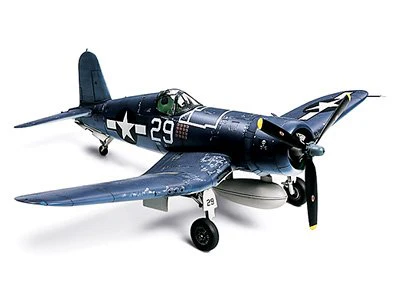
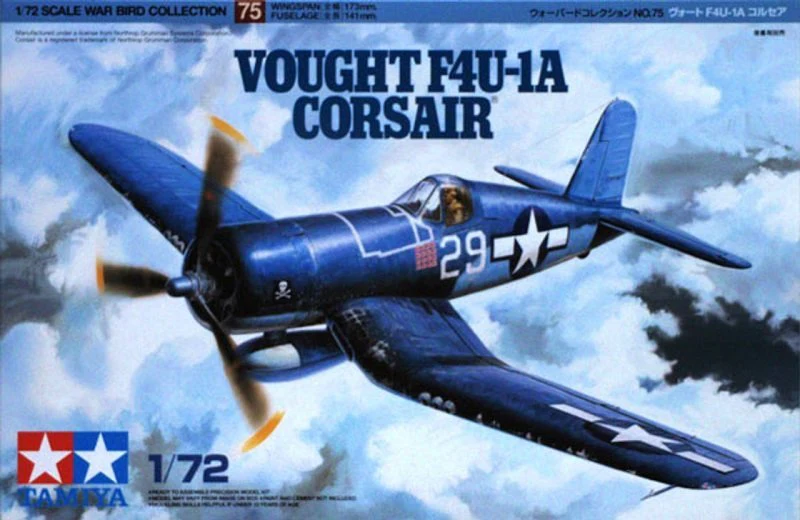
Introduced into service in 1942, the Vought F4U-1 featured inverted gull wings and a massive 2,000hp engine spinning the largest propeller mounted on a fighter at the time. While the fighter&39;s performance and toughness was quite impressive, deficiencies such as inadequate forward visibility, restricted all-round visibility due to the early frame-like canopy, and the tendency for the left and right wings to stall at different speeds led to various improvements being added throughout reproduction, eventually resulting in the F4U-1A version. These improvements included a longer tailwheel leg for better forward visibility, a new canopy for better all-round visibility, and an almost unnoticeable 15cm &39;stall strip&39; fixed to the leading edge of the right wing to ensure both wings would stall at the same speed.
Details & Craftsmanship
Every detail has been carefully considered to bring you the perfect product.
Description
Introduced into service in 1942, the Vought F4U-1 featured inverted gull wings and a massive 2,000hp engine spinning the largest propeller mounted on a fighter at the time. While the fighter&39;s performance and toughness was quite impressive, deficiencies such as inadequate forward visibility, restricted all-round visibility due to the early frame-like canopy, and the tendency for the left and right wings to stall at different speeds led to various improvements being added throughout reproduction, eventually resulting in the F4U-1A version. These improvements included a longer tailwheel leg for better forward visibility, a new canopy for better all-round visibility, and an almost unnoticeable 15cm &39;stall strip&39; fixed to the leading edge of the right wing to ensure both wings would stall at the same speed.